
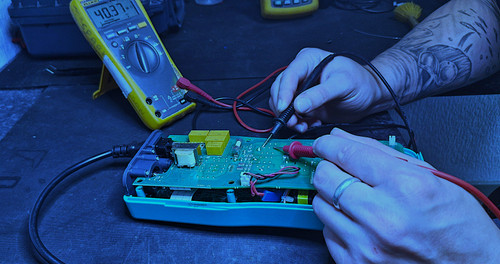
The Importance of Servicing
Posted by Amy Tadeo on 5th Feb 2026
A fixed gas detector that hasn’t been serviced isn’t just unreliable- it can be dangerous too.
Fixed gas detectors provide continuous 24-hour monitoring, helping to protect people and workplaces from flammable or toxic gases. When installed correctly, fixed gas detections identify rising gas levels early, activate audible and visual alarms, and can trigger safety controls such as ventilation or automatic shut-off valves.
However, these safety-critical systems only remain effective if they are routinely serviced, tested, and calibrated. Over time, sensors can drift, components can degrade, and hidden faults may develop without regular maintenance. Scheduled servicing reduces these risks, helping to keep gas detection equipment accurate, compliant, and fit for purpose.
In this blog, we explain why servicing is essential, the risks of missed maintenance, and how routine checks support workplace safety and compliance.
Why is it essential to service your fixed gas detector?
Servicing a fixed gas detector ensures the system can accurately monitor hazardous gas levels and respond immediately if a leak or dangerous atmosphere develops. Because fixed gas detectors operate continuously, their sensors are exposed to environmental conditions that can affect performance over time.
Factors such as dust, humidity, temperature changes, vibration, and chemical exposure can cause sensors to drift, become contaminated, or lose sensitivity. Without regular inspection and calibration, these issues may go unnoticed.
Regular fixed gas detector servicing is vital because it helps to:
- Maintain accurate gas readings through inspection, testing, and calibration
- Prevent sensor drift that can lead to false alarms or missed detection
- Identify contamination, damage, or installation issues affecting performance
- Confirm alarms, sounders, beacons, and control panels activate correctly
- Test connected safety systems such as ventilation, shut-off valves, or emergency shutdowns
- Reduce the risk of serious incidents, including fire, explosion, toxic exposure, carbon monoxide poisoning, or oxygen deficiency
- Support compliance with safety standards, audits, and insurance requirements through documented service records
Fixed gas detectors are safety-critical systems. Routine ensures they remain reliable, responsive, and capable of triggering the correct safety response when it matters most.
What are the risks of missing a service?
When a fixed gas detector is not serviced on schedule, its performance can decline gradually and unnoticed. Sensors and internal components may degrade due to wear and tear, vibration, heat cycles, corrosion, poor installation, or accidental impact.
Without regular testing and calibration, these issues can result in inaccurate readings, delayed alarms, or complete system failure- increasing the risk of serious incidents.
Schedules servicing helps detect faults early and prevents minor issues from escalating. Regular maintenance can help to:
- Reduce the risk of gas leaks and explosions
- Lower the risk of carbon monoxide (CO) exposure
- Maintain consistent and reliable system performance
- Extend the lifespan of gas detection equipment
- Ensure ventilation and flue safety systems operate correctly
- Support legal compliance and workplace safety obligations
How often should a fixed gas detector be serviced?
Most fixed gas detectors should be serviced and calibrated every six months to maintain accuracy, reliability, and compliance. Service intervals may vary depending on the environment, gas type, and manufacturer recommendations.
How is servicing carried out?
Professional fixed gas detector servicing must be performed by a manufacturer-trained engineer and typically involves:
- Visual inspection – checking for damage, contamination, corrosion, or installation issues.
- Functional test / bump test – applying test gas to confirm correct sensor and alarm response.
- Calibration – adjusting sensors to restore accuracy and compensate for drift.
- Alarm and safety system testing – verifying alarms, control panels, and any connected safety systems.
- Service documentation – providing records for compliance, audits, and maintenance tracking.
In Summary:
Regular fixed gas detector servicing keeps fixed gas detection systems accurate, responsive, and fully operational for 24/7 monitoring of flammable, toxic, and oxygen-displacing gases. Routine servicing, testing, and calibration help prevent sensor drift, reduce false alarms, and ensure alarms and safety controls (such as ventilation or shut-off valves) activate correctly during a gas leak.
Most fixed gas detectors should be serviced every six months, typically including inspection, bump testing, calibration with certified test gas, alarm/system testing, and service reports to support safety compliance and insurance requirements. A consistent maintenance programme improves long-term reliability and keeps fixed gas detection equipment dependable over time.