
Are your staff protected from the #1 cause of work-related injuries?
20th Oct 2023
Despite thorough training programmes and thorough risk assessments conducted by businesses, work-related injuries continue to occur in the United Kingdom.
In this blog post, we'll discuss the main causes of workplace injuries and fatalities, the legislation you should be following, and the equipment you can use to keep you and your colleagues safe.
What is the most common workplace injury?
The most common workplace injuries occur due to slips, trips and falls. Slips, trips and falls account for almost a third of all reported non-fatal injuries. Other causes of workplace injuries include:
Handling, lifting or carrying objects
Being struck by a moving object
Acts of Violence
Falls from a height
Wet floors and carelessly placed objects are two common causes of falls, which can result in broken bones, brain damage and in some cases, fatalities.
It is, however, falls from heights that kill more people at work than anything else.
According to HSE Statistics, 135 fatalities have been attributed to work-related incidents in 2022/23. Forty of these 135 were the result of accidents from an elevated position.
What causes most falls from a height?
The construction industry accounts for twice as many fatalities as the agriculture, forestry, and fisheries industries combined.
A considerable number of these fatalities transpire during tasks performed atop structures. Roofing lighting and fragile roofs are prevalent contributors to fatalities and injuries in the workplace, but do not account for all the falls from height.
How Can I Protect My Staff?
Employers or event organisers who have employees operating at heights should take the following precautions to ensure everyone's safety:
Never work at height if the job can be reasonably completed from ground level
Plan and oversee all tasks involving working at heights appropriately
Have a rescue plan ready in case of an emergency
Consider any weather conditions that could pose a threat to health and safety
Ensure staff working at height are competent, ie. they have sufficient skills, knowledge and experience to complete the job safely and properly
Use well-maintained, high-quality fall arrest equipment
What is Fall Arrest Equipment?
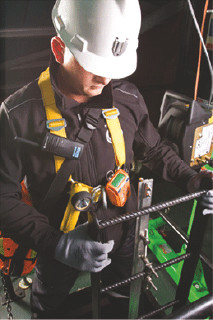
Fall arrest equipment is a type of personal protective equipment that protects you and your workers after you fall, by stopping you before you hit the surface.
Fall arrest equipment usually consists of a harness that works in conjunction with a lifeline or deceleration device, and an anchorage point.
Equipment for preventing falls permits employees to move freely while performing tasks at height. If they slip and fall, the system will promptly cease their descent, assisting them in evading the potential impact or, if that is not feasible, mitigating its force.
Point Safety is proud to be a distributor of fall safety equipment from RidgeGear. With more than two decades of experience, RidgeGear produces safety equipment of superior quality that ensures the protection of both you and your team. In addition to supplying this equipment, a number of Point Safety employees have received manufacturer-approved training. They are also able to organise specialised training days for you and your team to maximise the utility of the equipment.
If you or your employees often work at height and are looking for fall arrest equipment, get in touch with the Point Safety team. They can help you decide the best equipment for you, and arrange a demonstration.