
Air Quality in Classrooms
15th Sep 2021
It’s that time of year again, and as children start to settle into their new classrooms, and the craziness of reestablishing some kind of morning routine passes, some people may turn their attention to the usual concern of seasonal illnesses.
It’s well known that viral illnesses like cold and flu increase when the kids go back to school. That’s partly due to the changing weather conditions, and partly because children are back mixing together, and sharing their germs.
In light of the Covid19 pandemic, this concern becomes something that needs to be taken more seriously.
The importance of ventilation
It has been well documented that poor ventilation can increase the risk of airborne virus transmission.
In areas like restaurants and classrooms, and buildings with outdated HVAC systems and poor ventilation, the risk of illnesses spreading increases. That is why it is so important to ensure that these types of buildings are properly ventilated.
You may remember the stories from winter 2020, where the government guidance required that all classroom windows be kept open, to allow air to circulate and therefore lower the risk of transmission of Covid 19. Parents and children complained that it was too cold, and unnecessary.
When an area is ‘over ventilated’, as well as causing uncomfortable conditions, it can be a huge waste of energy. So, it’s important to find a way to monitor conditions, to keep everyone as safe as possible, without overdoing things!
Fresh, clean air has also been shown to increase productivity and strengthen the immune system, which is particularly important in classroom environments.
The solution
The best solution is to monitor the quality of the air in environments where transmission is likely to occur.
Research conducted by scientists at the University of Colorado has shown that real-time monitoring of indoor ambient air can be an indicator of increased risk of
airborne viral transmission. This means that proper monitoring of air quality can help to make decisions that could reduce the risk of transmitting illnesses in classrooms and similar environments.
This is backed up by the UK HSE, which says you should, “Use carbon dioxide (CO2) monitors to identify the CO2 levels to help decide if ventilation is poor.”
A well ventilated area will have levels of around 400-800ppm (parts per million) CO2. When levels go above this, it is an indicator that you need to ventilate as the air circulation is poor. If it goes below this, it is an indication that the area in question is over ventilated.
The Honeywell Transmission Risk Air Monitor
One solution for schools and other establishments where the transmission of airborne viruses is a concern is to install the Honeywell Transmission Risk Air Monitor.
This user-friendly, cost effective monitor gives real time assessments of the risk of exposure to airborne transmission, based on the detectable levels of CO2 in the area. It also takes into account activity levels, allowing you to choose from one of three pre-programmed indoor activity settings.
It is recommended for coverage of 800 - 1000 square feet and sounds an alarm to alert users of conditions that may increase the risk of exposure to illness.
The Air Quality Guardian
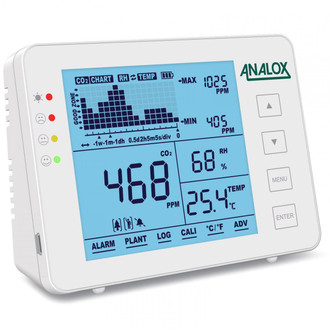
Another option for schools who wish to keep students and staff safe is the Air Quality Guardian.
The Air Quality Guardian measures Carbon dioxide levels, as well as temperature and humidity to give an indication of air quality, and the likelihood of transmission of airborne diseases. It helps establishments to maintain energy efficiency, by reducing the risk of over-ventilating, whilst still ensuring that the health and wellbeing of those in the area is protected.
Talk to the experts
If you’d like to find out more about the best options for your school or business, our expert team are happy to offer some guidance. Feel free to get in touch.