
The Hidden Dangers of Carbon Dioxide
29th Sep 2021
The Hidden Dangers of Carbon Dioxide
Carbon Dioxide (or CO2) is an extremely common gas, which is all around us. It is present in small concentrations in the air we breathe, and is a natural byproduct of many processes. It is also a valuable gas that is needed for a variety of purposes.
Its impact on the environment is a huge cause for concern internationally, and the world’s leaders are working on ways to reduce the damage of CO2 emissions.
However, it can also represent significant risk to health in high enough concentrations, and this is something which needs to be addressed at a business and personal level, in order to protect lives.
What is CO2?
Carbon Dioxide is a naturally occurring gas, present at a concentration of around 0.04% (412ppm) in the earth’s atmosphere. At this concentration, it is not harmful to health.
As it is a colourless and odourless gas at normal atmospheric pressure, it is not possible to detect without the proper equipment. This is the reason that tragic and preventable deaths happen from exposure to high concentrations of CO2 every year.
A Recognised Workplace Hazard
CO2 has been recognised as a workplace hazard for over 100 years. In Britain, it is classed as a 'substance hazardous to health' under the Control of Substances Hazardous to Health Regulations 2002 (COSHH).
This means that where there is a risk of exposure to CO2 in the workplace, regulations exist to ensure that certain measures are taken.
Industries Where CO2 Is Used
Carbon Dioxide has a huge range of uses, and is therefore used in a wide variety of industries, and in domestic settings as well. A few prominent examples are:
Manufacturing and Construction
Carbon dioxide is frequently used as a shield gas in MIG/MAG welding. It is also commonly mixed with argon to achieve a higher welding rate and reduce the need for post weld treatment.
Hospitality
Carbon dioxide is used to carbonate soft drinks, beers and wine. It also prevents fungal and bacterial growth. This means that it is present in many hospitality venues, and if a leak occurs, it can quickly build to dangerous concentrations in environments like cellars.
Pharmaceuticals and Petroleum
Carbon dioxide is used in oil wells for oil extraction, and is used to make oil less viscous, which helps with the extraction process. During chemical processes, carbon dioxide is used in large quantities as a raw material.
Breweries and Distilleries
During production of alcoholic drinks, carbon dioxide is released during the fermentation process. As yeast consumes the carbohydrates in the grains, CO2 is released into the atmosphere.
CO2 as a Byproduct
CO2 is also commonly produced as a byproduct of other processes. This includes the manufacture of ammonia, alcohol and fertilisers. It is also emitted by power plants.
The Dangers of Carbon Dioxide
Carbon Dioxide presents two significant dangers.
1- As an Asphyxiant
Carbon Dioxide displaces oxygen in the air we breathe. If it is allowed to reduce the oxygen levels in the atmosphere enough, it can cause asphyxiation. This means that people in the area would suffer the symptoms of oxygen deprivation, which can lead to unconsciousness and even death.
2- As a Toxin
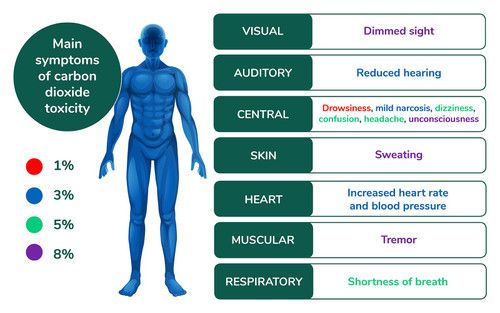
Carbon Dioxide itself is toxic, and can cause serious health problems. Symptoms vary depending on the concentration present, and how long a person is exposed.
- At 1000 ppm (a little over double the normal amount in the air around us), it only takes a couple of hours for a person to suffer from impaired judgement and slower thinking.
- Over the same time period, at 2,500 ppm, serious cognitive dysfunction sets in, and can appear as confusion and disorientation.
- At 5,000 ppm with 20.9% oxygen, people will start to notice headaches and may feel emotional.
All of these things are inconvenient, but may pose significant danger if the person is operating dangerous machinery, or partaking in activities which require quick reactions and clear thinking.
As CO2 levels in the area rise, the dangers get more significant.
- At 5%, breathing will be seriously affected.
- At 6%, it only takes exposure of 1-2 minutes for someone to suffer hearing and vision disturbances.
- At 8%, a person will lose consciousness after only 5 - 10 minutes.
- At 10%+ death can occur within a few minutes.
Precautions You Can Take
As Carbon Dioxide is colourless and odourless, there’s no way for a person to tell if the concentration is rising to dangerous levels. That’s why it’s so important to have the proper monitoring equipment in place in any environment where CO2 is used, or is produced as a byproduct.
Gas Monitor Point offers a wide range of gas monitors to suit any type of environment. If you’re not sure what the most suitable solution is for your particular needs, our friendly team is always on hand to help.