
Be ammonia aware!
Posted by Dawn Beever on 7th Nov 2018
Ammonia (NH3) is a compound of nitrogen and hydrogen. It is a colourless and corrosive gas with a characteristic pungent smell and alkaline properties.
We have gathered 10 interesting and informative facts about NH3 for you:
-At room temperature, ammonia is a colourless, highly irritating gas with a pungent, suffocating odor
-In pure form, it is known as anhydrous ammonia and is hygroscopic (readily absorbs moisture)
-Exposure to high concentrations of ammonia in air causes immediate burning of the eyes, nose, throat and respiratory tract and can result in blindness, lung damage or death
-Inhalation of lower concentrations can cause coughing, and nose and throat irritation
-In nature, ammonia occurs in soil from bacterial processes. It is also produced when plants, animals and human wastes decay
-The refrigerator uses three substances: ammonia, hydrogen gas, and water. This is used for purification of water supplies, manufacture of plastics, explosives, textiles, pesticides, dyes and other chemicals
-Ammonia also is effective at breaking down household grime or stains from animal fats or vegetable oils, such as cooking grease and wine stains.
-Because ammonia evaporates quickly, it is commonly used in glass cleaning solutions to help avoid streaking at a level of between 5 -10%, as opposed to concentrations of 25% or higher for industrial usage
-Ammonia is a building-block chemical and a key component in the manufacture of many products people use every day
-Ammonia is usually shipped as a compressed liquid in steel cylinders
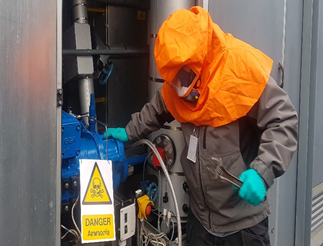
Unless well-maintained, catastrophic ammonia leaks from refrigeration systems do occur, the death of David Chandler at the Carlsberg brewery in Northampton in 2016 was accidental, but the ammonia refrigerant leak which killed him was preventable, an inquest decided. Death and injuries involving ammonia leaks happen every year. The risks of any escape will be site specific and depends on many factors including (but not restricted to): size of leak; is it indoor or outdoor; nature and quality of ventilation; moisture in the atmosphere; does the leak present an explosive risk as well as toxic.
Be ammonia aware!
A small leak of ammonia may only warrant opening the windows and turning on ventilation to clear the air. Larger escapes may demand the temporary evacuation of an area or possibly the whole site with emergency services being required to attend.
Ammonia is not a gas that can go unnoticed due to its pungent smell, however the levels of which the gas is present will be unknown, unless the individual is wearing a portable single gas monitor which has the readings on the screen. The gas monitor will go into alarm when the area is at an unsafe level.